Before Facebook dominated our feeds, there was Friendster — the scrappy social network that gave a generation of Filipinos their first taste of online connection. It went dark in 2015. Now, a decade later, it’s back. And this time, it’s stripping everything down to the essentials.
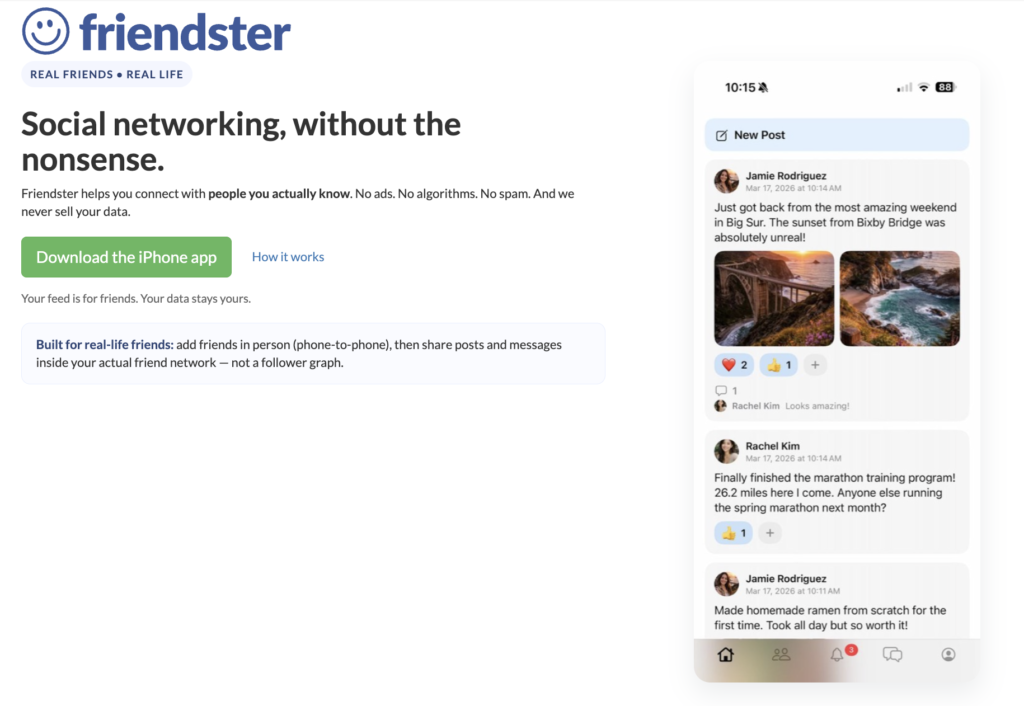
Philadelphia-based programmer Mike Carson relaunched Friendster this week after acquiring the domain and brand trademarks for USD $30,000. His pitch is straightforward: a social platform with no ads, no algorithms, and no data selling.
The new Friendster is built around one core rule: to add someone, you physically tap your phones together. No follower counts, no requests to strangers. Your feed shows only people you actually know, and if you haven’t seen a friend in over a year, that connection quietly fades on its own.
It’s a timely move. Trust in major social platforms is at a historic low, and users are increasingly skeptical of feeds engineered to keep them scrolling rather than connecting.
There are limitations worth noting. The app is currently iPhone-only, with no Android version on the horizon, which is a significant gap in a region where Android dominates. Carson has also been upfront that his earlier invite-only soft launch gained modest traction, so building a critical mass of users will be the real test.
Still, Friendster has something most new social apps don’t: genuine nostalgia capital, especially in the Philippines, where the platform was deeply woven into early internet culture. Whether that’s enough to make people actually switch is another question, but the idea at the heart of it is solid. A social network that gets quieter the less you show up in real life is a genuinely interesting design choice.