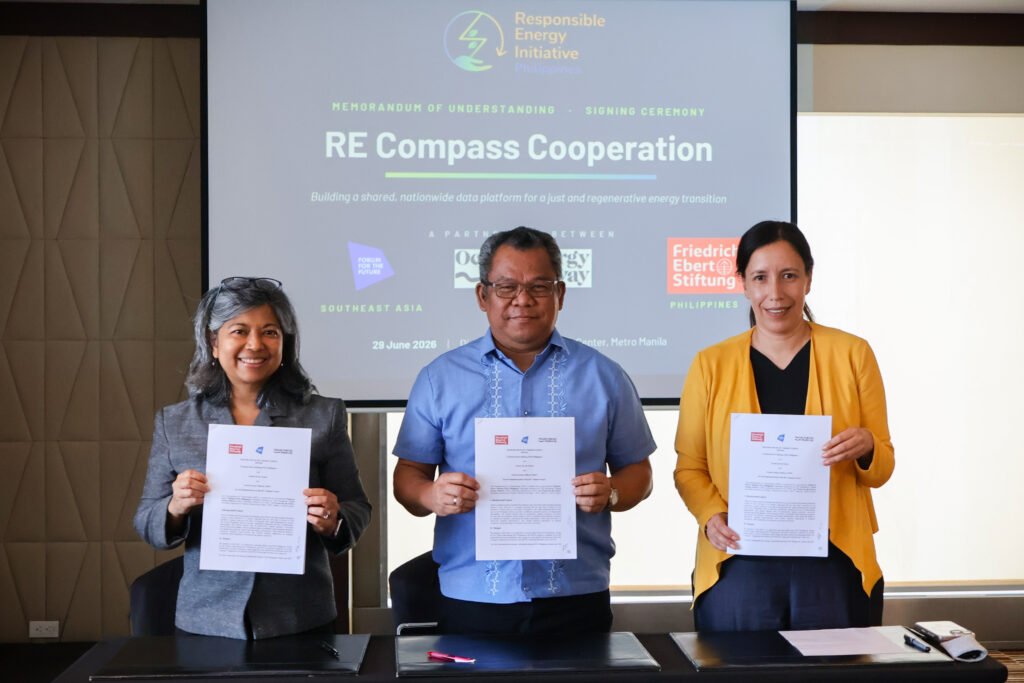
PASIG CITY, PHILIPPINES – Forum for the Future, Ocean Energy Pathway (OEP), and Friedrich-Ebert-Stiftung (FES) Philippines today signed a Memorandum of Understanding (MOU) formalizing a two-year collaboration to support an ecologically safe and socially just energy transition in the Philippines.
Central to this collaboration is RE Compass, a data-sharing and governance platform designed to provide independent, participatory data on biodiversity, natural resources, and the social impacts of renewable energy development in the Philippines.
“Renewable energy development in the Philippines is moving fast, but speed without the right information creates risks for communities and ecosystems alike. RE Compass is about making sure that the actors involved in RE development have the information to manage environmental and social risks, and that the people most affected have a role in determining the decisions,” said Sumi Dhanarajan, Managing Director, Southeast Asia, Forum for the Future.
RE Compass will provide renewable energy developers, policymakers, and host communities with shared, credible data on where RE projects are proposed and the ecological and social conditions in those areas. Currently, independent, consolidated, and context-specific data on biodiversity, ecosystem services, and social impacts remain limited, constraining nature-positive and socially inclusive approaches to policy planning and project execution. RE Compass will give key actors in the RE system a common basis for identifying where interventions are needed and for setting clear indicators for risk management.
“The information that should guide where renewable energy projects are developed is often fragmented, and the perspectives of affected communities are not always reflected early in decision-making. RE Compass aims to bring these elements together by combining credible data with participatory approaches before site decisions are made. An energy transition is more likely to succeed when it is informed by sound evidence and shaped through inclusive dialogue,” said Natalia Figge, Country Director, Friedrich-Ebert-Stiftung (FES) Philippines.
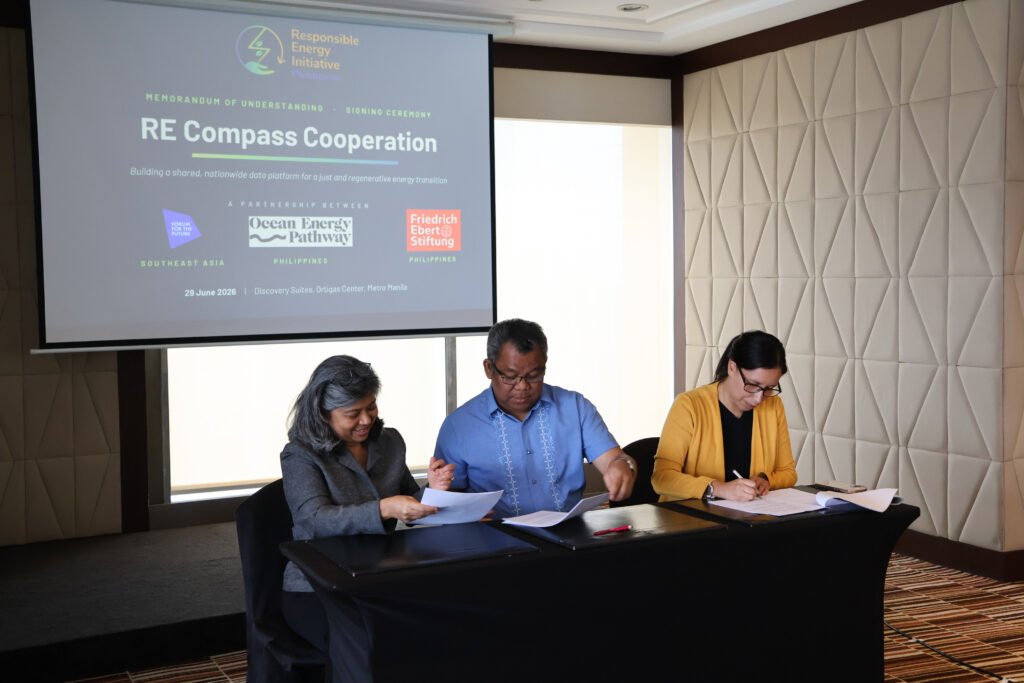
Over the course of the two-year collaboration running through March 2027, RE Compass will be developed in three phases. The first focuses on building the coalition and consolidating fragmented datasets on biodiversity hotspots, ancestral domains, and grid corridors. The second introduces a prototypical digital platform to a selected geography to test data-sharing frameworks with local government units and coastal communities. The third phase aims to socialize the platform and embed it within the national data infrastructure, complementing existing government permitting systems.
“The offshore wind sector in the country needs a robust platform for stakeholders, including coastal communities, developers, local governments, and key government agencies, to share the status of development in their respective areas. This platform promotes transparency and open dialogue among stakeholders, ultimately fostering trust among the key actors of the offshore wind sector,” explained Rizaller “Jun” Amolo, Country Head (Philippines), Ocean Energy Pathway (OEP).
“Access to credible data and early, meaningful community participation in the development process are crucial for building buy-in, which is essential for the success of the offshore wind sector,” he added.
About the organizations
Forum for the Future
Forum for the Future is a leading international sustainability non-profit with 30 years of experience working with business, governments, and civil society to accelerate the shift towards a just and regenerative future in which both people and the planet thrive. It convened REI Philippines (Responsible Energy Initiative Philippines) since 2023 to align government, industry, communities, civil society, and finance around a responsible and just energy transition in the country.
Ocean Energy Pathway
Ocean Energy Pathway accelerates global offshore wind growth through programmes which support the energy transition, enhance marine ecosystems and empower local communities. We provide expert, independent support to governments and key decision makers to fast-track offshore wind worldwide. Through collaboration with leaders in policy, industry, and conservation, we help shape sustainable solutions for the long-term growth of offshore wind. Ocean Energy Pathway owns the offshore wind POWER Library, in collaboration with Climate Policy Radar, to help policymakers easily find curated reports and policies related to offshore wind. Headquartered in the UK, we work in Australia, Brazil, Colombia, India, Japan, Mexico, the Philippines, South Korea, and Vietnam with ongoing projects in several other countries.
Friedrich-Ebert-Stiftung (FES) Philippines
Friedrich-Ebert-Stiftung Philippines promotes social democracy by fostering dialogue, supporting evidence-based policymaking, and working with government institutions, trade unions, academia, civil society organizations, and other partners to advance democratic governance, social justice, and inclusive development.